Inside the Room – The Luxury Report
Download the Inside the Room report
What Ultra-High-Net-Worth Security Really Looks Like
Event recap from TSP Smart Spaces’ inaugural panel “Guardianship of Wealth: A New Era of Security & Risk Mitigation” , October 28, 2025, held in partnership with Planeta Design Group and sponsored by Dowbuilt.
Inside the Room – Event Recap
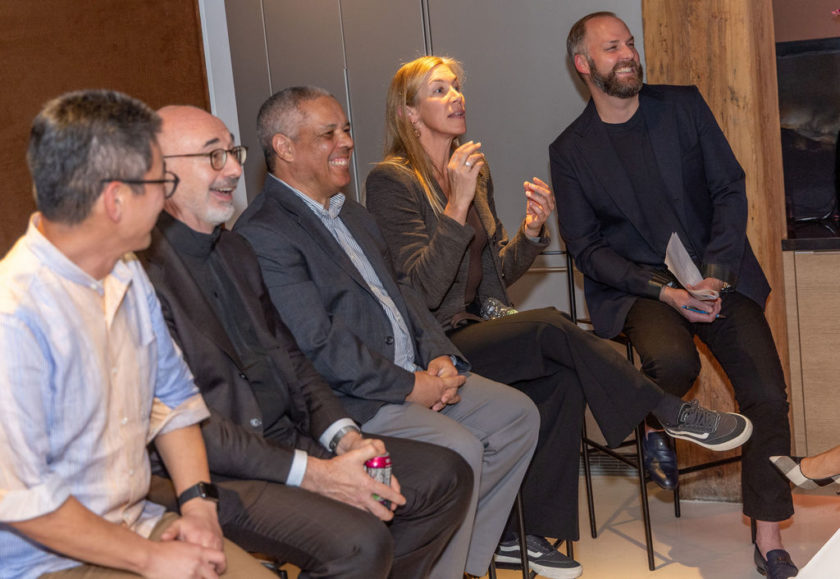
When TSP Smart Spaces and Planeta Design Group gathered an audience of architects, builders, technologists, family offices and wealth advisors for their first event on ultra-high-net-worth individual (UHNWI) security, the tone was different from most “fear-based” panels. Founder Michael Oh set the stage early, noting that nearly every person who RSVP’d did attend the event. “That tells me we’re on to something unique,” he said. “Most conversations about security are driven by fear. What we’re trying to do is the opposite: education, inquiry, and proactive thinking.”
Building a culture of education, not alarm
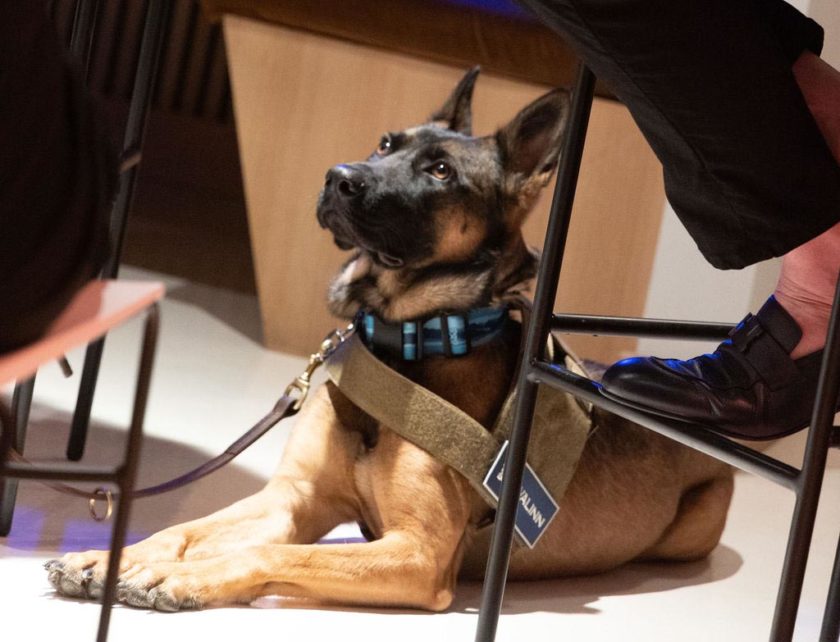
The evening began with introductions that doubled as miniature life stories. Kim Greene, founder of Svallin, spoke about her unusual path from advising President Karzai in Afghanistan to training protection dogs at her ranch in Montana. “People hear ‘dog trainer,’ but my background is security advising and intelligence gathering,” she said. “There’s plenty to be afraid of out there, but I don’t sell fear. I sell empowerment and preparedness.”
Tony Grey, who leads cyber and operational risk at Presage Global, described his journey from the U.S. Army Special Forces to Microsoft and Motorola, and eventually to risk consulting for clients who “face real-world threats due to their business interests.” His approach focuses on what he calls “the intersection of cyber, privacy, and operational risk.” As Grey put it, “You have to play the hand you’re dealt. The closer you get to a threat event, the worse your hand becomes. Our job is to strengthen that hand before it’s too late.”
John Rusk, founder of Rusk Renovations in New York, brought a builder’s perspective. “Two of my ultra-high-net-worth clients have had home invasions,” he said. “Luckily, no one was home, but it opened my eyes. I realized there was so much I didn’t know about how vulnerable even the best-built homes can be.”
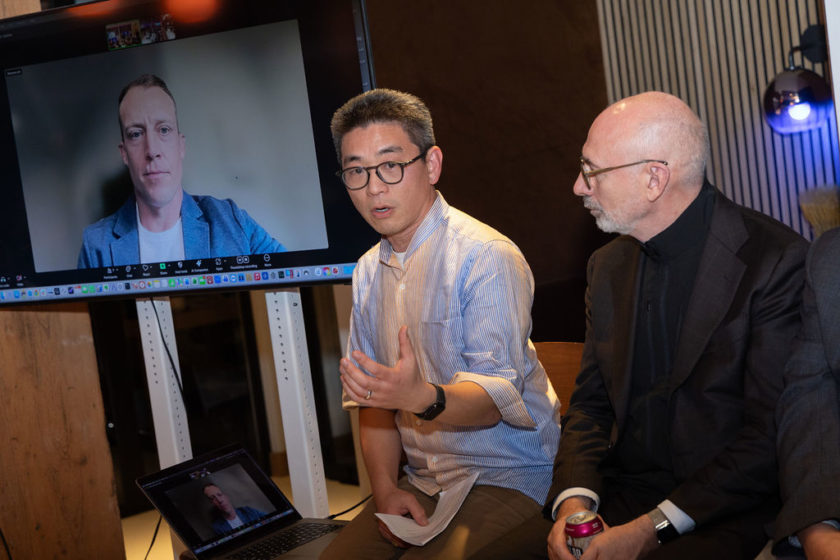
Grant Bowen, founder of Peak Projects, joined virtually from California. His firm represents UHNWI clients on large-scale residential projects across the country. “We build homes that are as secure as they are beautiful,” Bowen explained. “Our role is to align design, vision, and execution while protecting our clients’ time, privacy, and peace of mind.”
Understanding the UHNWI mindset
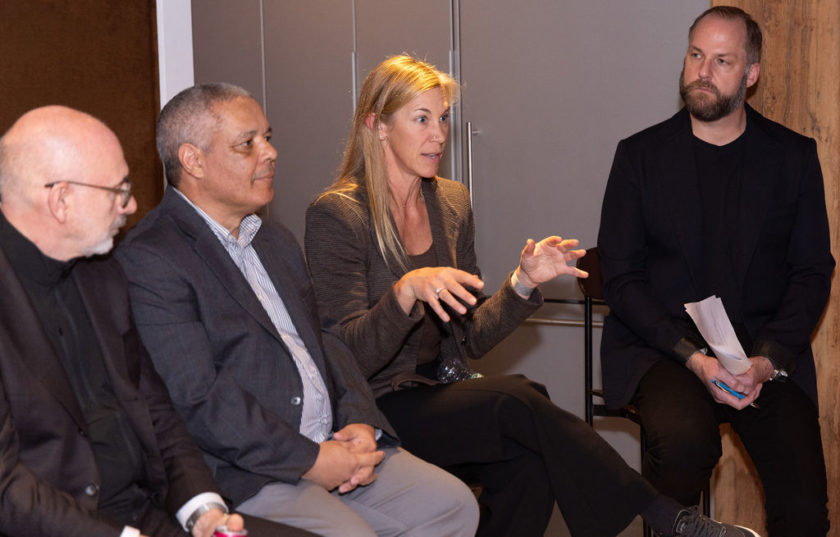
Moderator Patrick Planeta steered the conversation toward a central question: “how do you empower wealthy clients without frightening them?” Grey described his communication framework as part storytelling, part strategy. “You start by telling them something they already know,” he said, “then tell them something they don’t know about that thing. That’s how you get their attention.” From there, he moves to what he calls a “pragmatic threat model” built on three questions: What are we doing? What could go wrong? What are we doing about it?
Kim Greene added that her clients rarely come to her out of panic. “Most of my clients found me because they saw one of my dogs out in public and wanted to learn more,” she said. “They’re curious. They want to understand what protection really looks like.” Her clients tend to be referrals or word-of-mouth connections. “Fifty-seven of my last sixty-three clients came through word of mouth,” she noted. “These are people who want to feel prepared, not scared.”
Emotional safety and deterrence
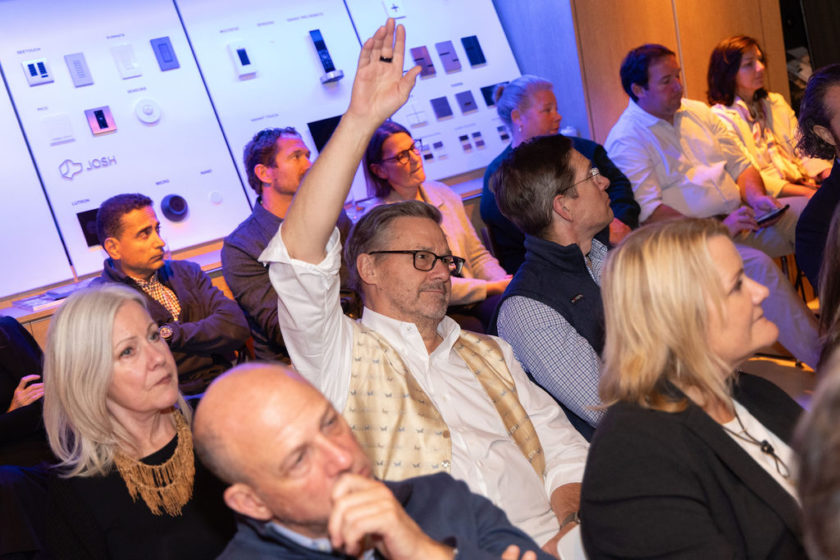
Greene spoke about the emotional side of security, describing her canines as “guardian angels and best friends rolled into one.” She shared one of the few real-world deployment stories in her 20 years of business, when a trained dog intervened during an attempted carjacking in Nairobi. “Someone opened the back door of a car where a child was strapped in. Before anyone knew what was happening, the dog deployed over the child and took the attacker down,” she said. “The family drove to safety and 200 yards away stopped and called the dog to the SUV.. That dog made the difference between a tragedy and a story they could tell later.”
She explained that protection dogs offer an immediate deterrent effect. “You don’t have to be the hardest target,” Greene said. “You just have to be a harder target than everyone else in your space.” Her clients, many of whom prefer privacy, often find comfort in the companionship as much as the protection. “It’s not about drawing attention,” she said. “It’s about grounding.”
Behavioral risk and insider threats
Michael Oh shifted the discussion to behavioral risks, which are the most unpredictable but common vulnerabilities among UHNWI families. “Risk isn’t technical,” he said. “It’s behavioral.” Grey elaborated: “Many breaches start from trust. A long-time staff member, a vendor with admin access, or a child’s device connecting to the home network. It’s not always a hacker halfway around the world.”
He emphasized that staff and vendors must be continuously vetted, not just at hiring. “When clients tell me their house manager is ‘like family,’ I remind them that ‘like family’ isn’t family,” he said. “People’s circumstances change. Divorce, gambling debts, drinking problems. All of that affects judgment and, in turn, security.”
Greene agreed, noting how much trust her team is given when delivering protection dogs. “We enter people’s homes and are treated like family,” she said. “That’s an honor, but it also comes with responsibility. We do continuous background checks, because it’s not enough to assume that good people stay the same forever.”
Privacy by design in the built environment
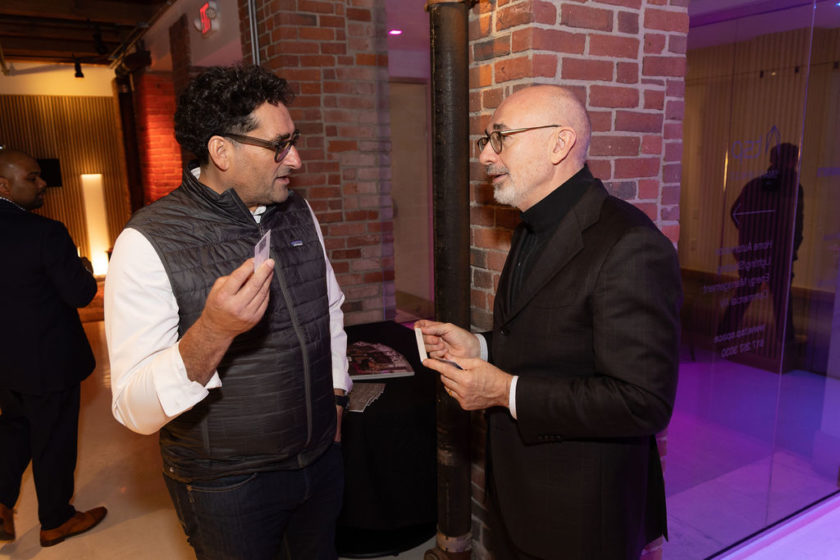
Both Rusk and Bowen spoke about privacy and security in construction, a topic often overlooked until it’s too late. “People buy properties without realizing what they’ve bought,” Rusk said. “They fall in love with a townhouse that has street-level entrances and no real way to secure them.” His company, Rusk Lock, now audits projects specifically for physical and operational security. “It’s not about building bunkers,” he said. “It’s about making sure you can live normally without being a target.”
Bowen expanded on this, explaining how his team integrates security into the earliest design stages. “When we manage a project, we start with best practices,” he said. “We sign NDAs with every vendor, rename rooms on public plan sets, and make sure properties are held in LLCs so ownership details stay private.” He’s even renamed bedrooms on blueprints submitted for permits. “You don’t need the world to know where the family sleeps,” he said. “It’s subtle, but it matters.”
Rusk added that the same logic applies to reputational risk. “The wrong contractor can damage your reputation faster than a security breach,” he said. “If you’re cutting rock for eighteen months in a quiet neighborhood, you’re creating enemies you didn’t mean to.”
Cyber risk and the everyday device
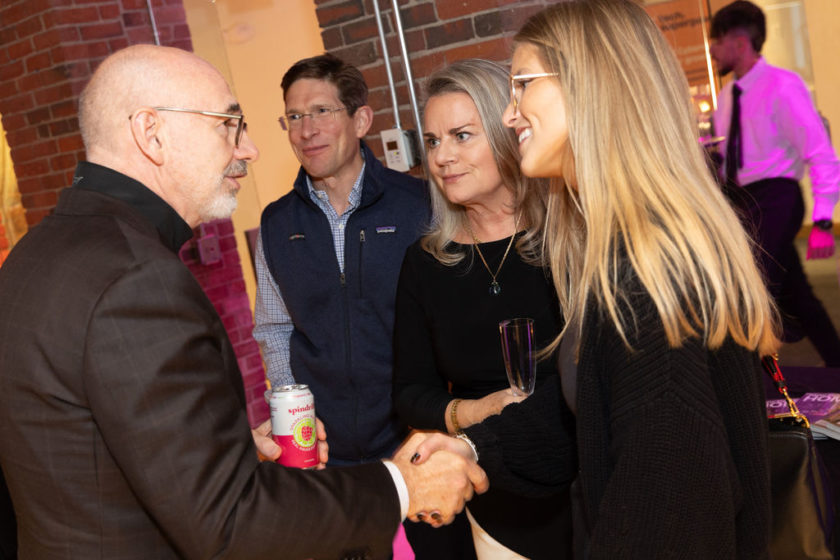
Grey offered a chilling but practical example of cyber vulnerability. “Most of your life is inside your phone,” he said. “In some parts of the world, attackers take your phone at gunpoint, make you unlock it, then switch it to airplane mode so you can’t shut it down. They walk away with access to your emails, financial accounts, and cloud data. Multi-factor authentication won’t save you because they already have your session.”
His advice was to plan for these scenarios in advance. “Have an alternate communication method. Work with your private banker on a duress protocol. The goal isn’t to make you paranoid; it’s to make you prepared.”
Deepfakes, AI, and the erosion of trust
As the discussion turned to AI, the room’s tone grew more urgent. One attendee asked how to handle the rise of deepfake videos and AI-generated voice clones. “We’re already seeing scams where someone gets a phone call that sounds exactly like their daughter asking for help,” Grey said. “I tested this myself using Sora, and my client’s wife said she would have believed it was her husband’s voice.” His solution was simple but effective: “Create a safe phrase. If someone calls you in distress without it, assume it’s not them.”
Grey stressed that the solution isn’t purely technical. “People, process, and technology have to work together. Have a crisis management plan, a legal advisor, and a communications team. You can’t automate trust.”
Ransomware and the cost of paying up
When asked whether victims should ever pay ransoms, Grey didn’t hesitate. “Never pay the ransom,” he said. “You can actually be fined by the U.S. government for funding terrorism if you pay the wrong group.” He referenced new regulations that penalize organizations who unknowingly pay sanctioned entities. “The better approach is prevention,” he added. “Immutable backups, segmented networks, and tabletop exercises so everyone knows what to do when, not if, a breach happens.”
What comes next
By the end of the evening, the through-line was clear: true protection is built on foresight and collaboration, not panic. “You can’t buy discipline,” Michael Oh reminded the room. “You can only practice it.” The best results come when security is treated as a lifestyle architecture, embedded early and revisited often.
Bowen summed it up neatly. “When security feels like part of the home, people lean in instead of pulling away,” he said. “It’s an investment in peace of mind.”
Rhiannon Hayes closed by reminding attendees that this forum is just the beginning. “We wanted to start a conversation about how to live safely in a complex world,” she said. “The next step is to keep talking, keep sharing, and keep learning from each other.”
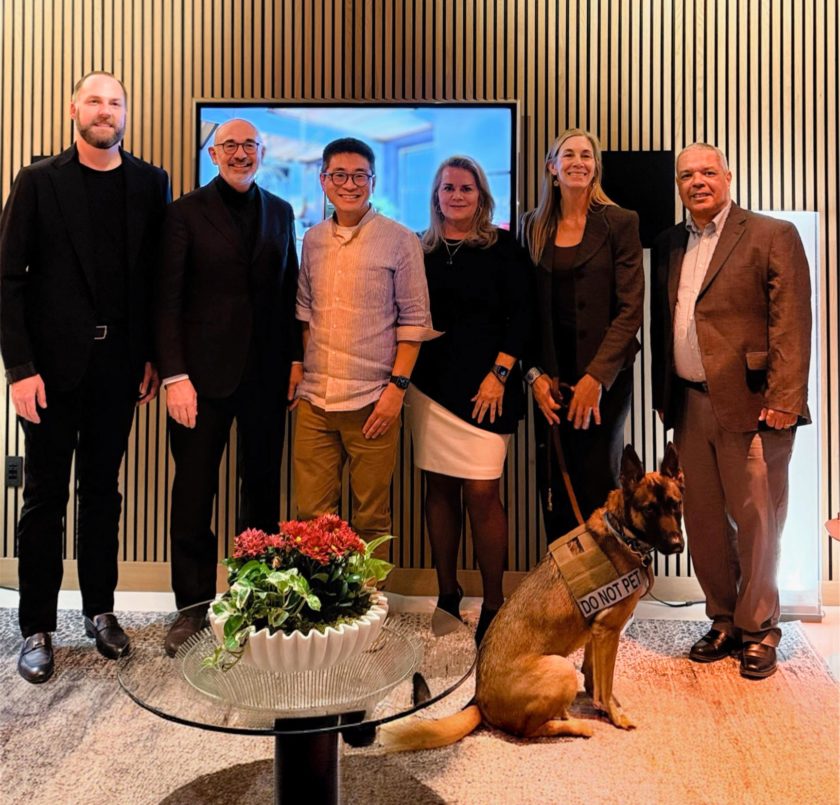
A big thank you to our panelists!
Kim Greene – CEO of Svalinn – Kim is the Founder & President of Svalinn, a Montana-based company breeding and training elite family protection dogs, first established in Nairobi in 2005. Featured in The New York Times Magazine, Financial Times, The Week, and The Times of London, Svalinn is recognized as a boutique security enterprise. Its methods draw from experience in Afghanistan, Kenya, and Somalia, guided by strict criteria to ensure each K9 is both a protector and trusted companion.
Grant Bowen – CEO of Peak Projects – Grant Bowen is the Founder & CEO of Peak Projects, a premier real estate advisory and owner’s representation firm specializing in private estate development and high-end residential projects across North America and beyond. He began his career at a leading Bay Area family office, where safeguarding Principal’s interests taught him to build effective frameworks for clear expectations, top-tier team selection, and seamless communication.
Tony Grey – CISO of Presage Global – Tony Grey is a seasoned Chief Information Security Officer with extensive experience leading global cybersecurity programs for family offices and high-net-worth individuals. Formerly CISO and VP of Technical Operations at Hagerty, he guided the company’s NYSE IPO while building a robust security framework. He has also served as vCISO for Athletic Greens/ AG1 and held leadership roles with Microsoft, Motorola, and Guidance Software.
John Rusk – President of Rusk, Inc. – John Rusk is the founder of Rusk Renovations, New York’s premier luxury residential firm since 1986, renowned for transforming Manhattan’s most prestigious homes. Trusted by wealth managers and family offices, the firm combines craftsmanship with risk management expertise. A Columbia educator and Master Mediator, John has earned the Lucy G. Moses Award and global recognition.
Thank you to our moderators!
Patrick Planeta – Principal, Planeta Design Group – Celebrating nearly 30 years in the industry, Patrick is the principal and owner of Planeta Design Group, a multidisciplinary architectural and interior design firm based in Boston’s South End. He is recognized for his passionate, immersive, and detaildriven approach, creating fresh, inviting, and innovative designs across residential and commercial projects. In addition to his design practice, Patrick brings his expertise as a dedicated art advisor, helping clients build meaningful collections of contemporary works informed by his own deep experience as a collector.
Michael Oh – CEO & Founder, TSP Smart Spaces – Michael, an MIT-educated aerospace engineer and serial entrepreneur of 30 years, started his first company, Tech Superpowers, in the IT services space in 1992 and still runs it today. TSP Smart Spaces, a division created around 13 years ago, has excelled in the luxury smart home and AV technology spaces. TSP provides one of the only technology services aimed at the UHNWI space, working with private family clients and multi-family offices to architect technology and cybersecurity solutions. TSP also counts the Boston Celtics and Kayak.com as long-time clients.
About Planeta Design Group – Founded in 2006, Planeta Design Group brings together expertise in architecture, interiors, fine art, procurement, and project management to deliver thoughtful, holistic, and impeccably curated design solutions. Our mission is to create singular environments—spaces that not only reflect your vision, but expand what you imagined possible. We manage every facet of the design journey, from programming and schematics to contractor selection, construction administration, furniture procurement, and fine art advisory. We collaborate closely with you throughout, helping you make intentional decisions about how you live, what you value, and what you want your environment to express. At the heart of our work is a belief that design is an act of personal curation. It’s about choosing what you want to surround yourself with—objects, materials, textures, and experiences that resonate. We invite you fully into that process, cultivating a sense of boundless curiosity as you explore the craft behind each element: visiting an artist in their studio, watching a leatherworker hand-stitch a refined detail created with you, or speaking with a metalsmith about how a bronze patina can transform the feel of an entire room. We design for those who seek something truly personal—something created exclusively for them.
Thank you to our Sponsor!
About Dowbuilt – At Dowbuilt we actualize the vision of renowned architects and discerning clients by using the highest level of craftsmanship and innovative construction know-how in the industry. Our culture of craft has been honed for 45 years by talented teams across the country, bringing our experienc and leadership to New England over the past five years. Our work is grounded in a deep respect for the art and discipline of building, carried forward by teams of builders, craftsmen, and leaders who understand that exceptional homes are not simply constructed, they are carefully orchestrated. Working alongside trusted trade partners who share our attention to detail, we excel at navigating complex projects while upholding uncompromising standards.