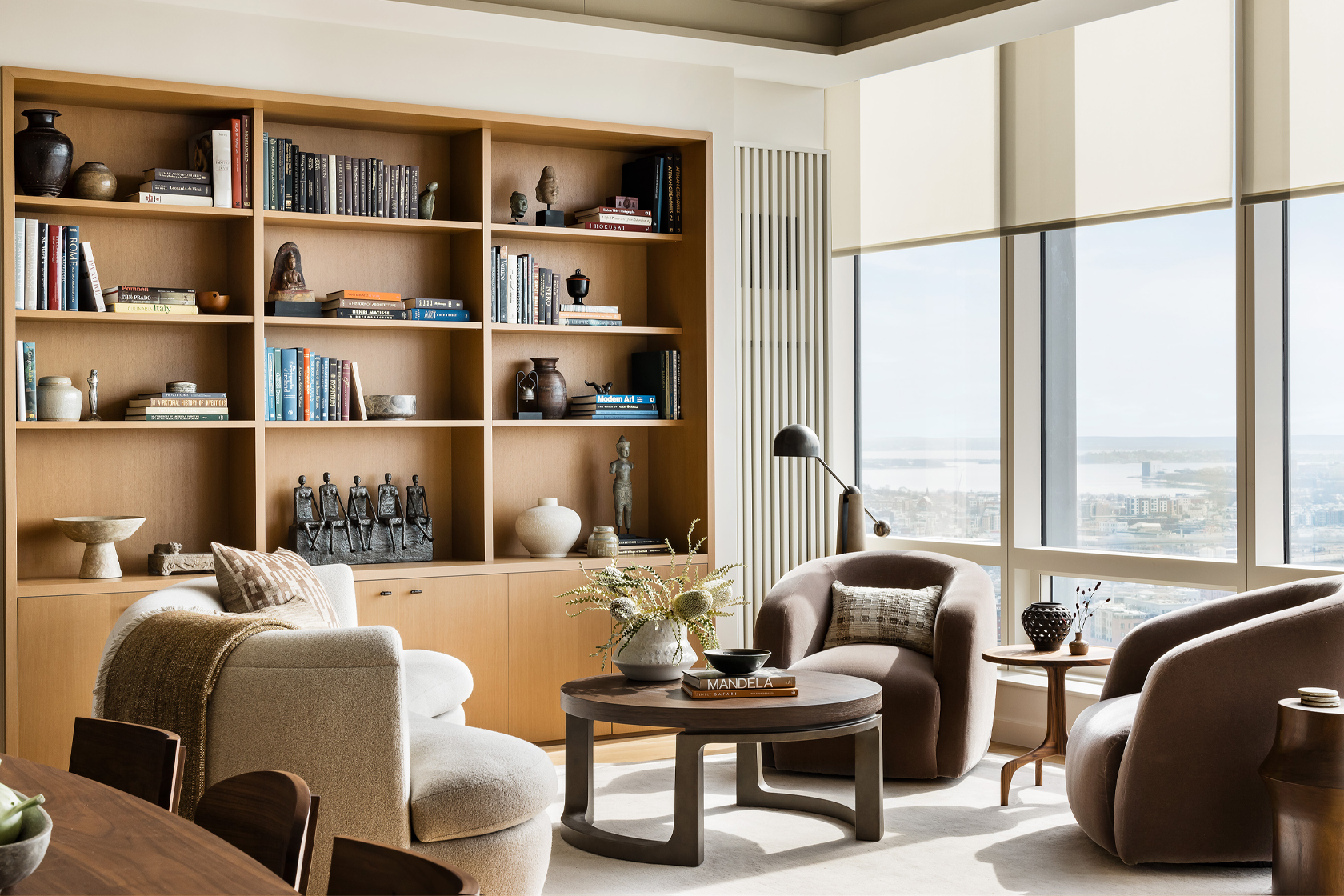
Set high above Raffles Boston Residences, this 1,750-square-foot condominium redefines what luxury city living looks like through intentional collaborative design.
Designed by Hacin with close input from TSP Smart Spaces, the home was created for an empty-nester couple transitioning from a large suburban residence to a more streamlined, city-centered lifestyle. The goal wasn’t only to downsize their life, it was to simplify it wherever possible. And that’s where technology became essential.




Designing for Real Life
Rather than treating technology as an add-on, it was considered from the very beginning, shaping how the home functions on a daily basis.
“We always appreciate a collaboration that balances both technology and design,” shared designer Rebecca Rivers. “There’s a real dialogue around how a space should feel, and how systems can support that.”
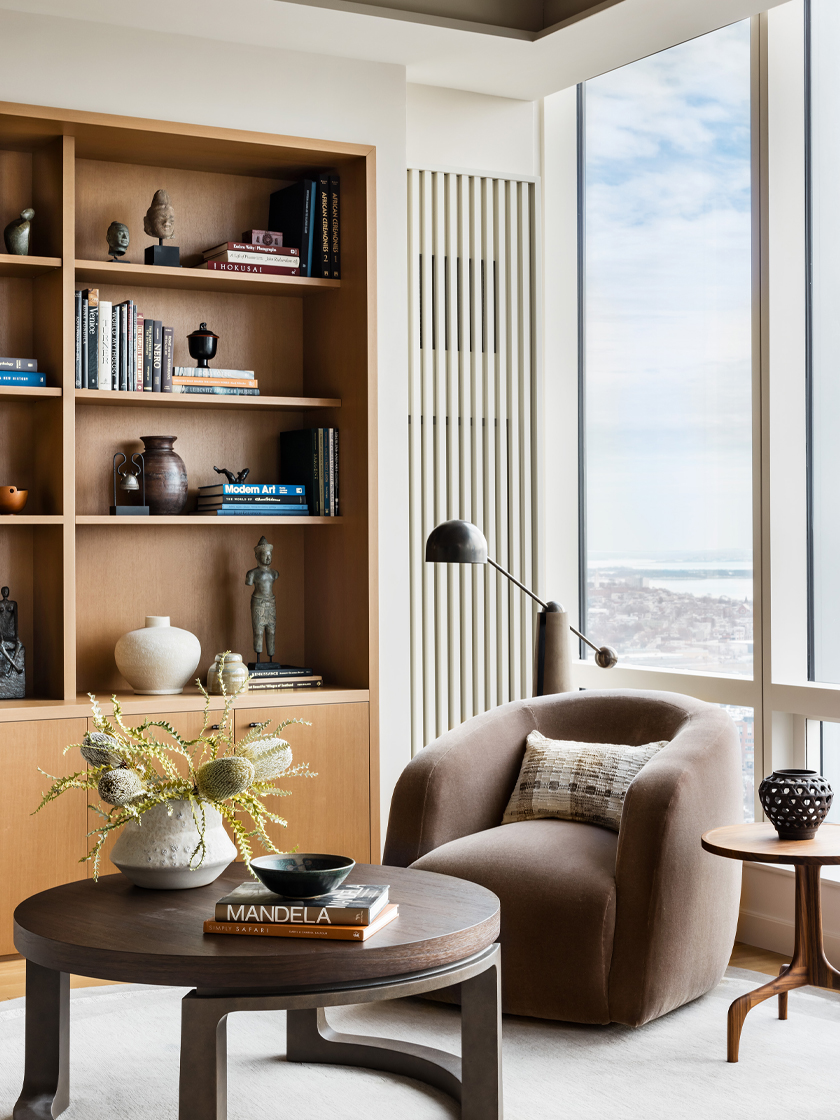
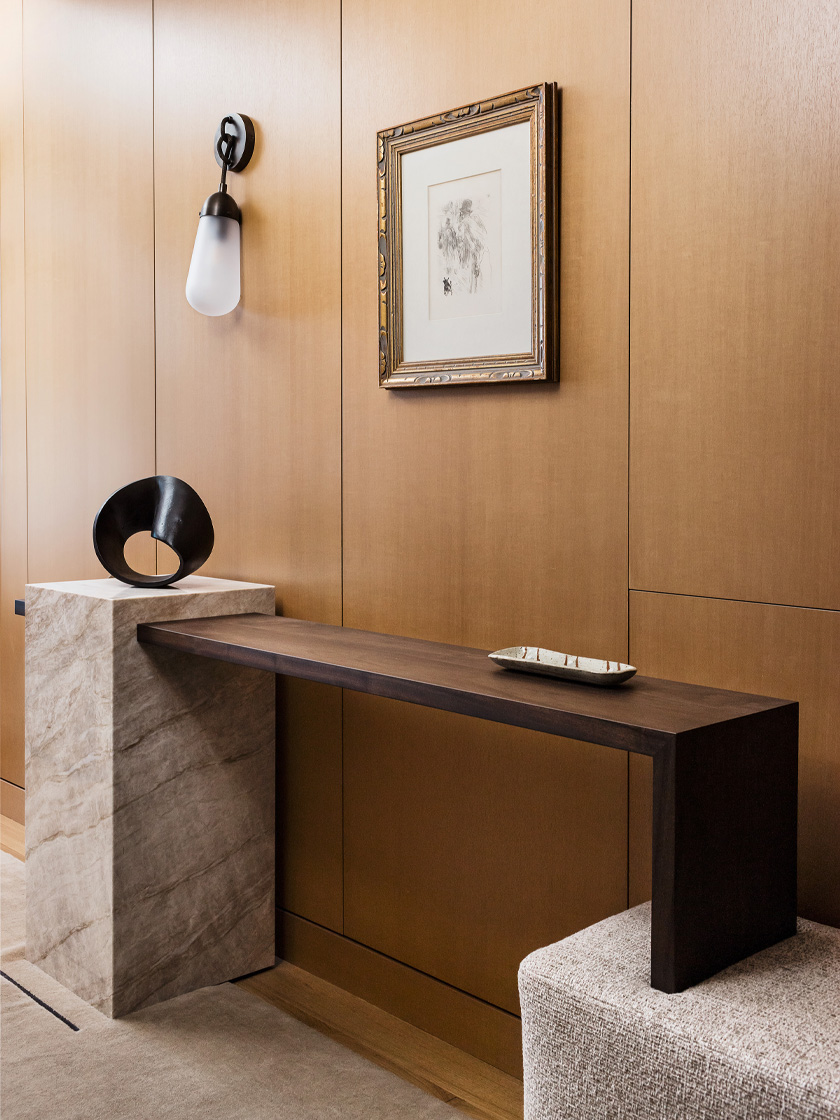
Lighting played a central role in that conversation. Working closely with the design team, a layered lighting approach was developed to enhance warmth, highlight artwork, and create subtle shifts in mood throughout the day.
But just as important as what you see is what you don’t.
Technology That Steps Back
Throughout the home, technology is intentionally quiet. Present when needed, invisible when not.
- A fully integrated Lutron HomeWorks system allows for effortless control of lighting and motorized shades, including a one-touch “all off” feature that simplifies daily routines.
- Sonos distributed audio fills the space through Amina invisible speakers, preserving clean architectural lines without sacrificing sound quality.
- LG displays are recessed with custom backboxes and articulating mounts, ensuring a flush, integrated appearance within millwork.
- A Cisco Meraki system provides a robust, reliable backbone, keeping everything running seamlessly behind the scenes.
The result is a home that responds intuitively without ever demanding attention.
A Home That Adapts
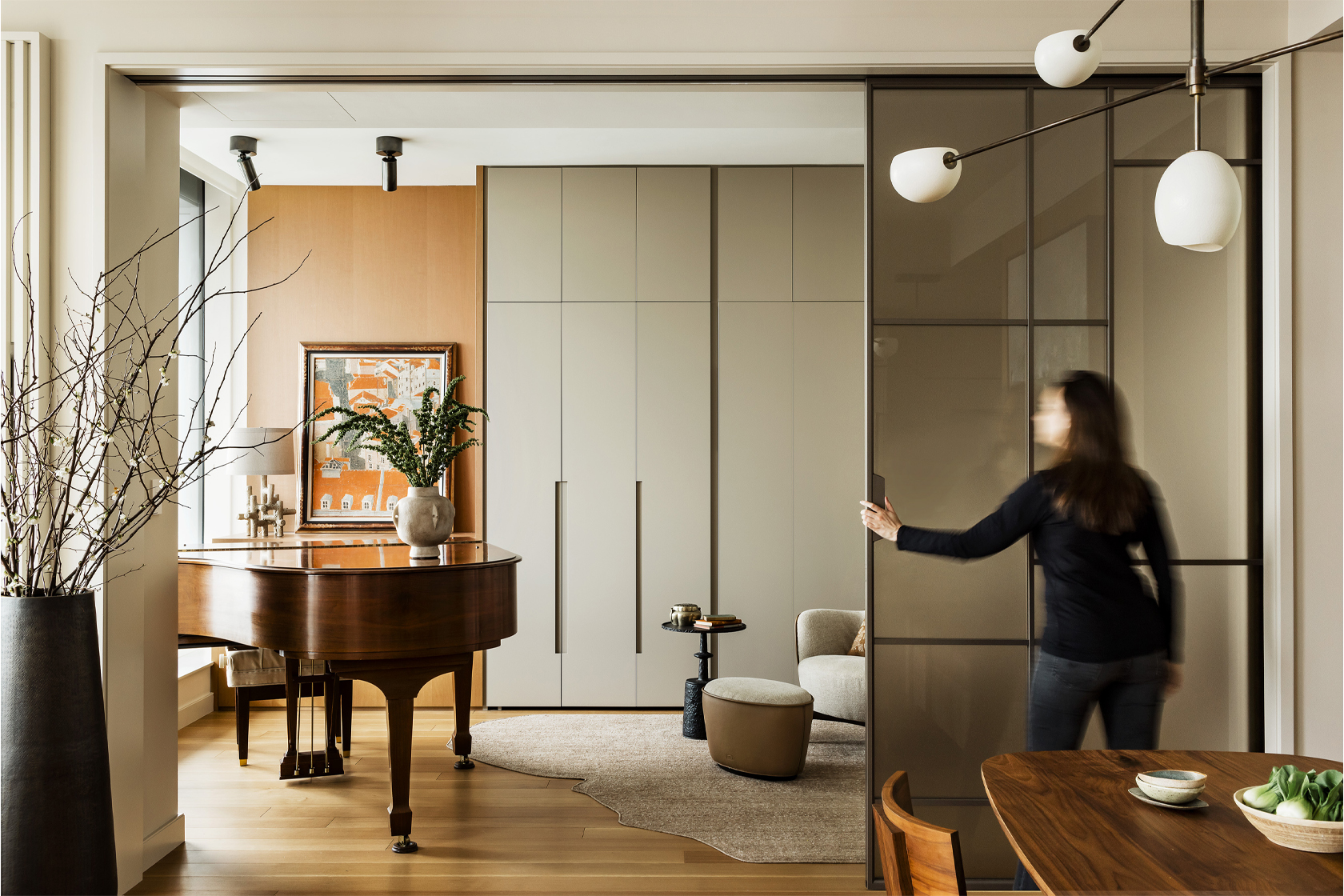
In a high-rise environment, every square foot matters. The design team reimagined the original layout to better reflect how the homeowners actually live.
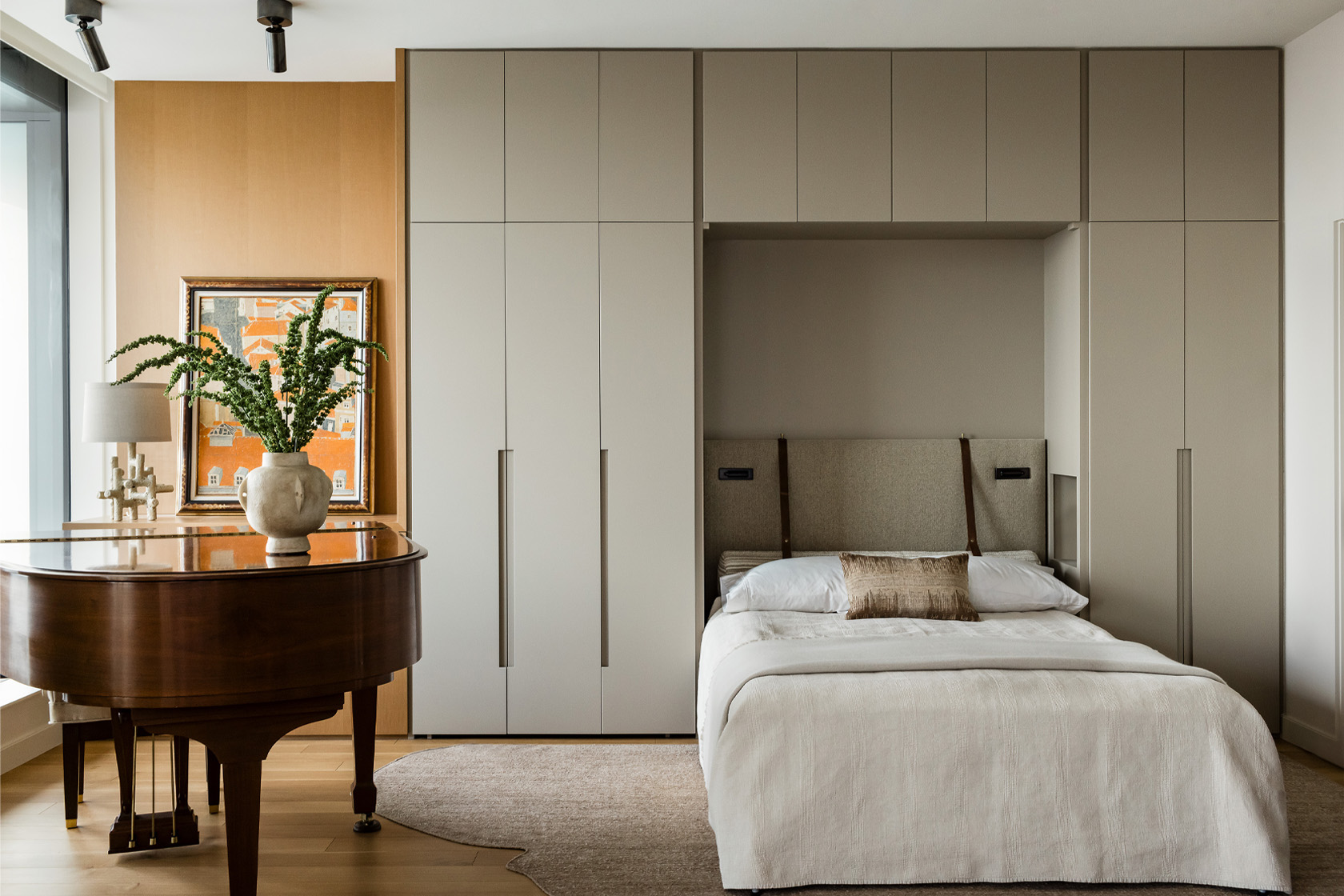
A secondary bedroom transforms into a multi-functional space, seamlessly shifting between office, guest suite, and extension of the living area through custom millwork and a concealed Murphy bed.
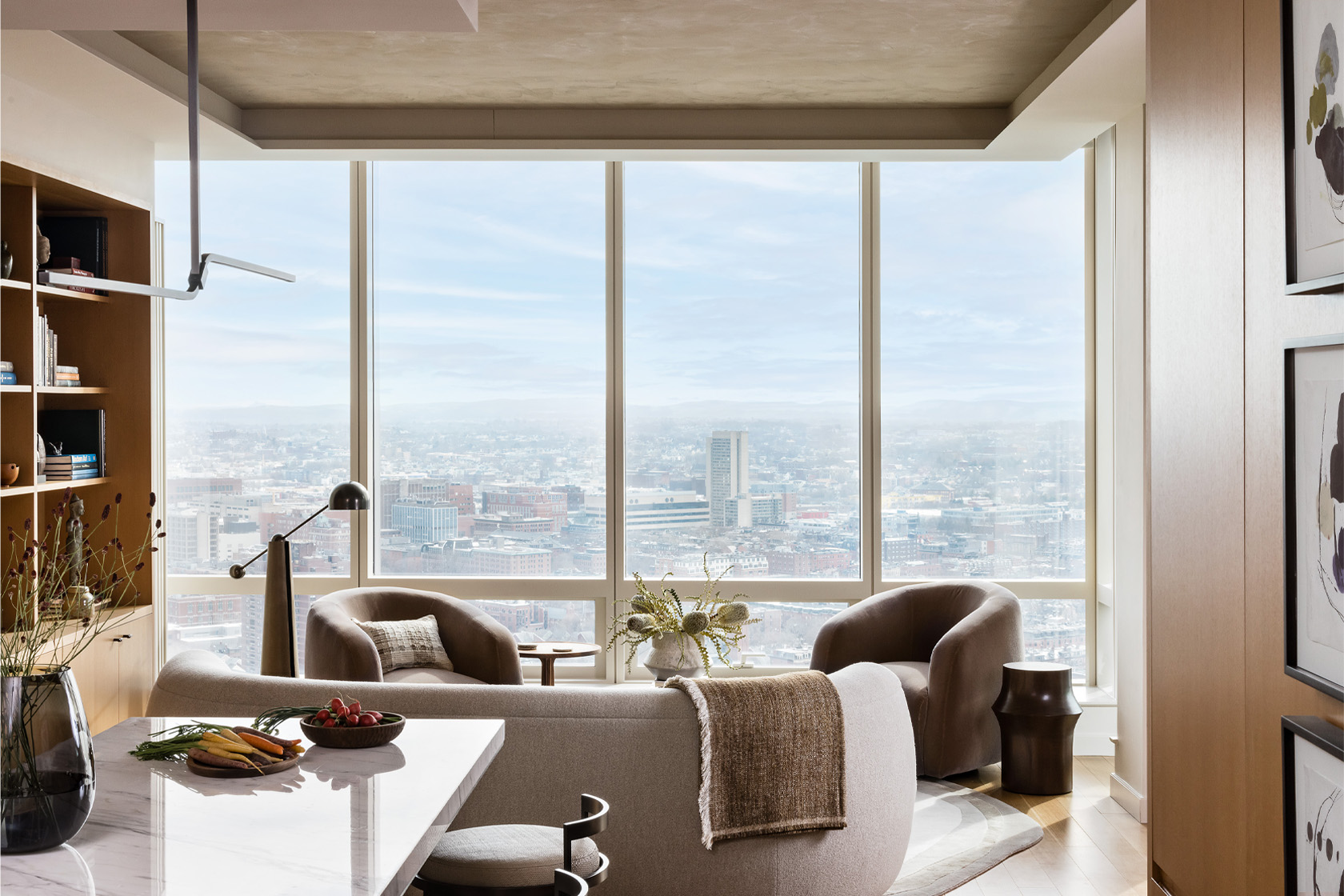
The primary living space, meanwhile, was designed to prioritize what matters most: light, openness, and the view.
“We didn’t want the TV to be the focus,” Rivers explained. “The goal was to create a space centered around the experience of living there.”
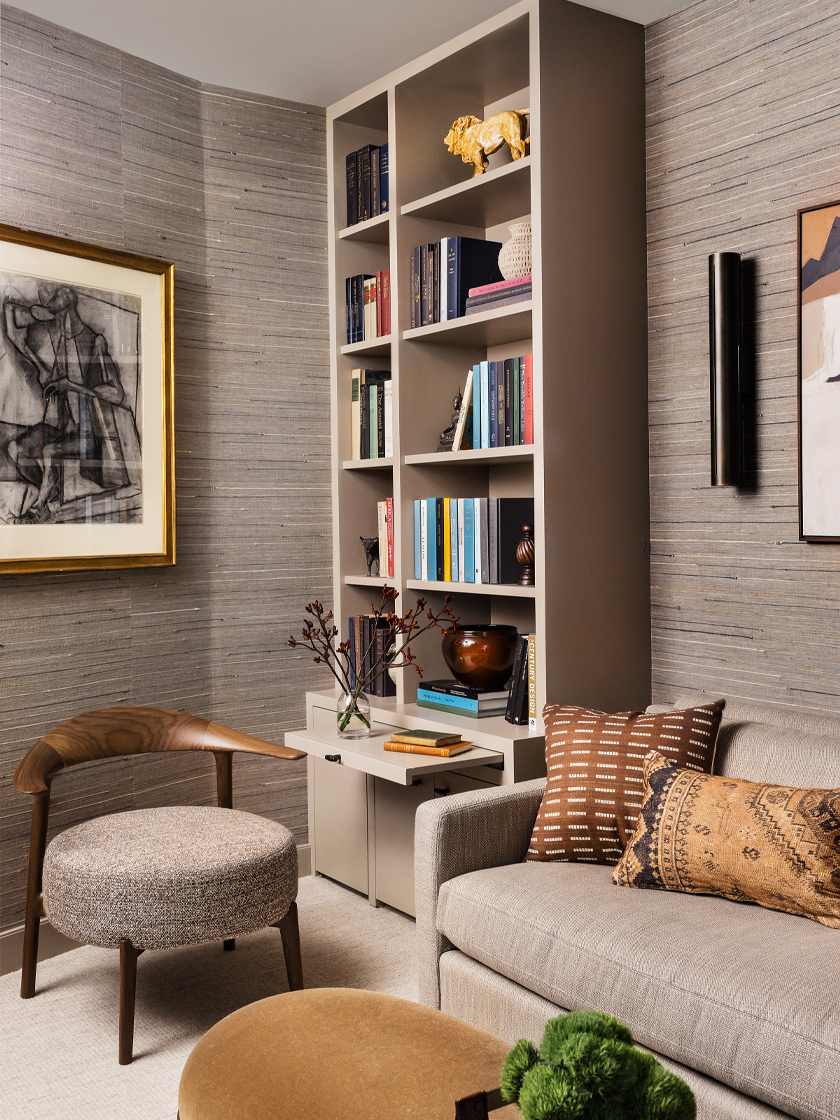
That philosophy carries into a dedicated media room, where technology takes center stage only when it’s meant to.
Light, View, and Control
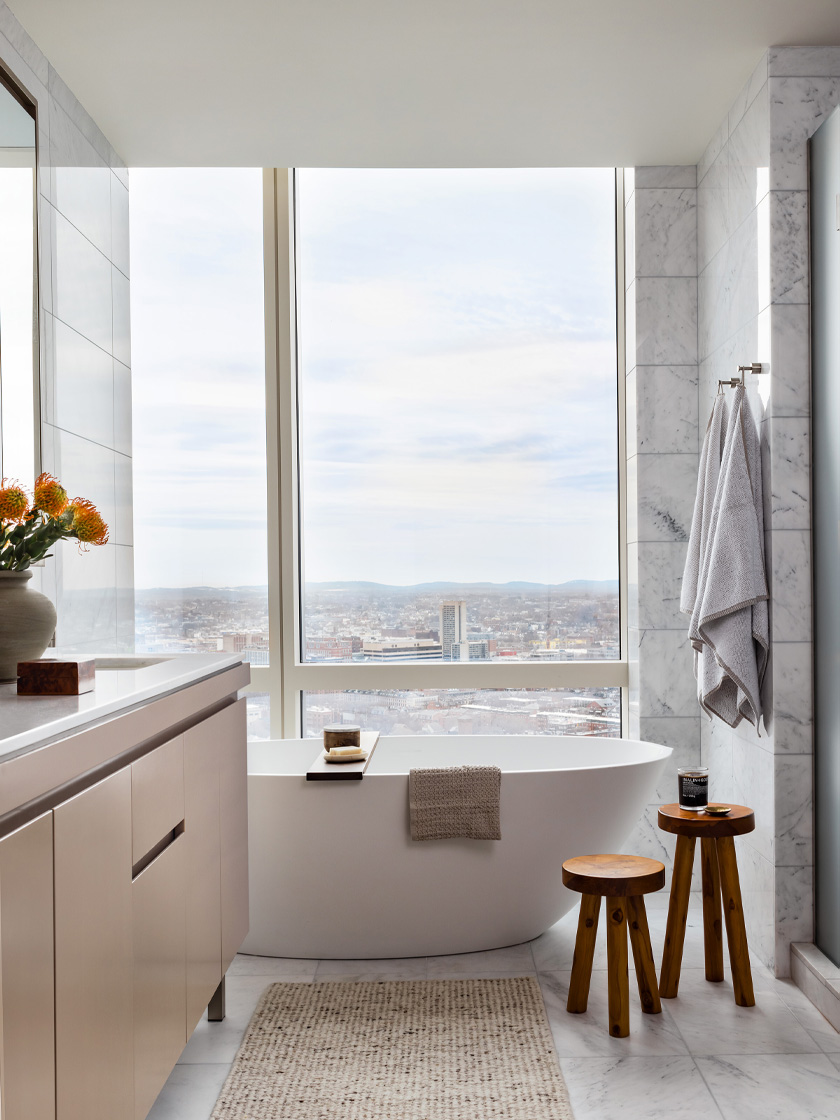
Positioned on the 33rd floor, the home is flooded with natural light, but that comes with challenges.
Motorized shades were carefully calibrated to respond to changing conditions throughout the day, preserving views while managing glare and heat. Notably, the homeowners opted against blackout shades, embracing natural light as part of their daily rhythm.
The result is a home that evolves from morning to night without constant input, quietly adjusting in the background.
A Better Way to Live
For the homeowners, this project wasn’t about more than just looks. It was about creating a more effortless lifestyle.
After experiencing high-rise living during their temporary stay at another high-rise in the city, they recognized the value of integrated systems that simplify everything from lighting to window treatments to entertainment.
Now, whether they’re home or traveling, the space remains consistent, responsive, and easy to manage.
And perhaps most importantly: it never feels complicated.