Why a Professionally Installed TV Costs More Than One from the Store
It’s a fair question. And honestly, a smart one to ask.
We hear it all the time:
“Why does a professionally installed TV cost so much more? I can get a TV at Best Buy for a fraction of that.”
And the truth is: you absolutely can. For many homes and situations, that approach makes perfect sense.
What we’re offering at TSP Smart Spaces, though, isn’t just a television hung on a wall. It’s a complete TV solution designed to look intentional, sound good, work reliably, and feel like part of your home rather than something added after the fact. Once you understand what’s included, the pricing starts to make a lot more sense.
The TV Is Only the Starting Point
When most people think about buying a TV, they’re focused on the screen itself: size, resolution, and brand. That’s the obvious part.
Where things really diverge is how that TV lives in your space.
A retail TV often ends up mounted with visible wires, external boxes stacked below, power cords dropped through a wall plate, and audio handled by tiny speakers firing downward or backward. It works, but it clearly reads as a product that’s been added to the room.
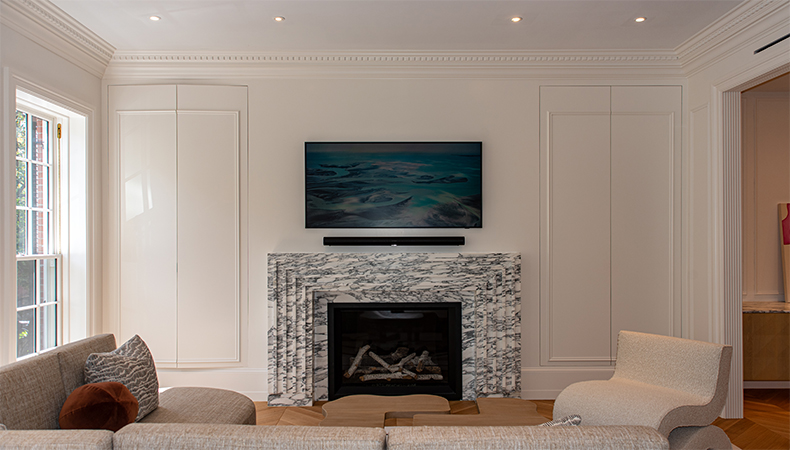
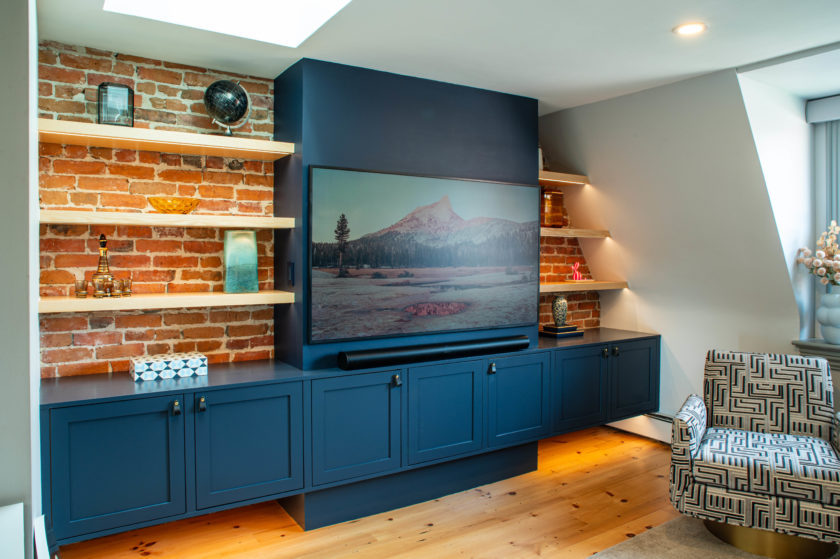
A professionally installed TV is treated as part of the architecture.
That means planning cable paths before anything goes up, opening walls when needed, installing recessed backboxes, selecting mounts that allow the display to sit perfectly flush, and making sure everything disappears once the job is done. The goal is a clean, intentional result that feels permanent.
That level of finish requires design work, skilled labor, and coordination. It’s one of the biggest differences between a basic retail install and a professionally designed TV system.
How We Talk About Pricing
Believe it or not, professionally installed TV solutions can range widely, typically from around $6,000 on the low end to $20,000 or more, depending on the space, the design goals, and the audio experience.
That range exists because we’re not pricing a single product. We’re pricing an outcome.
When we talk with clients, we’re upfront about what drives cost:
- How flush and integrated the TV needs to be
- Whether audio is treated as an afterthought or as part of the experience
- What’s happening behind the wall, not just on it
- How reliable and future-proof the system needs to be
We help clients decide where they want to land on that spectrum, based on how they actually use the space.
The Audio Is Where Everything Changes
Here’s something most people intuitively understand once it’s pointed out:
TV speakers are bad. Even on expensive TVs.
That’s not a knock on manufacturers, it’s a physical limitation. Ultra-thin displays simply don’t have room for speakers that produce full, clear sound. The result is dialogue that’s hard to hear and audio that falls flat the moment you turn the volume up.
Once you start improving audio, costs naturally rise. But so does enjoyment.
That might mean:
- A properly integrated soundbar
- In-ceiling speakers flanking the TV
- A hidden subwoofer that adds depth without visual clutter
At the higher end, dedicated home theaters can push well beyond that, sometimes into $75,000+ territory like our theater in our Experience Lab, because audio, acoustics, and immersion become the primary focus.
What You Don’t See Matters More Than What You Do
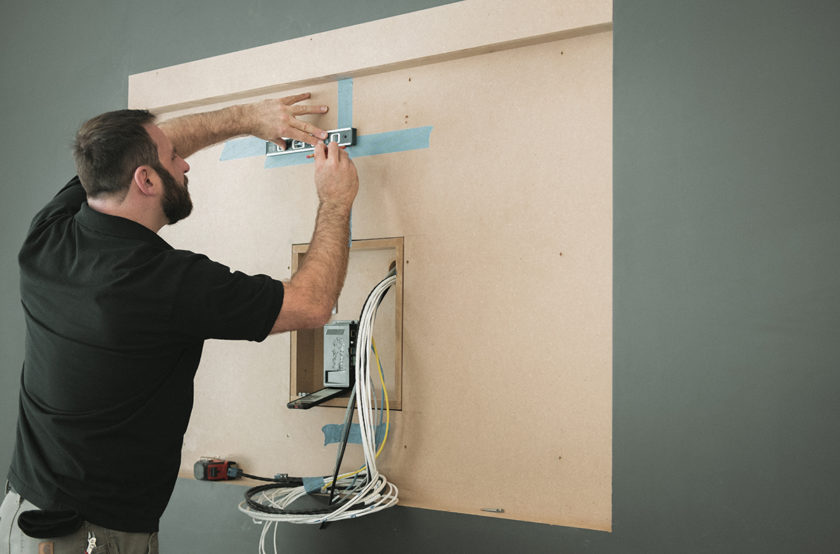
Behind a professionally installed TV, there’s a lot happening that most people never see. And that’s by design.
Inside the wall, you’ll often find:
- Power conditioning to protect the system
- Streaming devices installed cleanly behind the display
- Hardwired network connections for speed and stability
- Audio components designed to work together, not compete
A wired streaming device alone can make a noticeable difference. It’s faster, more reliable, and far less prone to hiccups in busy homes with lots of connected devices. It’s the difference between “it usually works” and “it just works.”
A Product vs. a System
Buying a TV from a store gets you a product.
What we deliver is a system.
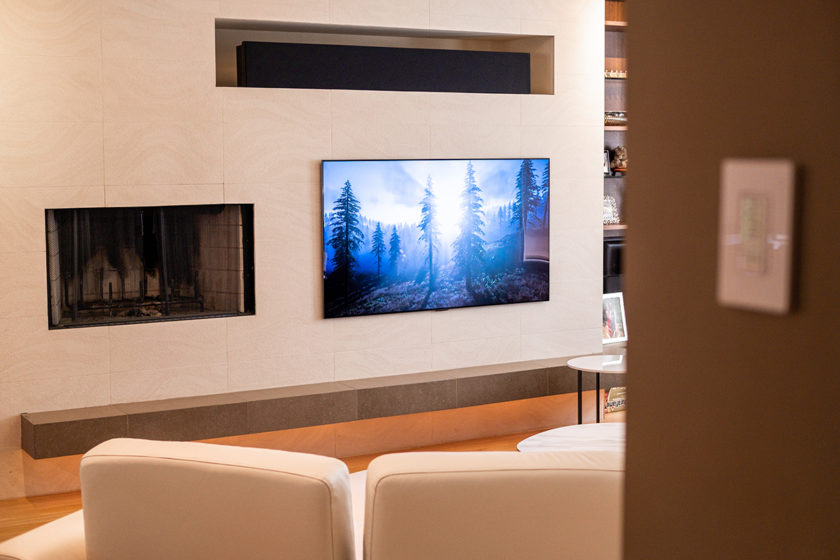
That includes the design, the infrastructure, the installation, the integration with your network and audio, and the confidence that if something changes, or something goes wrong, you’re working with a team that understands exactly how it was built.
Both approaches are valid. They just solve very different problems.
If your goal is simply to get a screen on the wall, retail solutions are great. If your goal is a clean, integrated setup that elevates your space and removes friction from daily use, that’s where professional installation comes in.
That difference is what you’re investing in, and it’s something you feel every time you turn the TV on.